
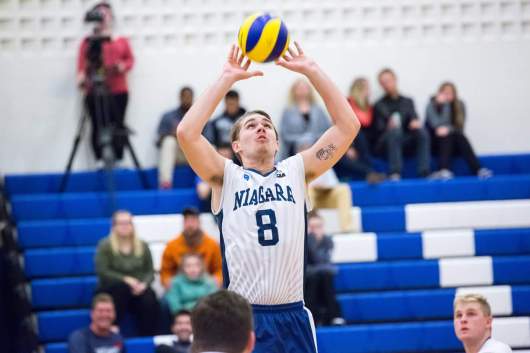
Photo credit: Ryan McCullough Photography
“Pain is gain” is an expression that has been freely used, for as long as I can remember, in two distinct areas of my life: what it means to be a man, and in competitive sports. Men are taught from a young age to mask their emotional and/ or physical pain, and to resist any inclination to let their hurt show: men are taught to adopt the mantra “fake it ’til you make it.” The comment that I receive far more than any other is “I don’t hear about too many athletes who have mental health disorders, it’s an underexposed topic”, or at least something along those lines. The fact is, however, that 20% of Canadian’s suffer, or will suffer, from a mental health disorder, and this statistic doesn’t change just because you’re an athlete. There is arguably more pressure on student athletes than any other part of the student body as athletes interact with administration, coaches, teammates, therapists, alumni, media, other athletic programs, teachers, parents and advisors. Athletes can be scrutinized at any turn for not maintaining their grades while living away from home for the first time, or for not performing 100% in a match even when they have written 2 exams that day and got only 4 hours of sleep the previous night because they were studying. Unrealistic standards and expectations are inherent to the competitive nature of athletics and the pervasive culture in which athletes are not at school to graduate or to become a better person, but rather to win. Winning is everything in our culture, and that attitude can stress mental health and stability.
Probably the single most frustrating thing for me personally is the low value we often place on developing and maintaining mentally healthy athletes. While it has been emphasized that sports are as much mental as they are physical, many coaches and administration continue to fail to adhere to standards in athlete’s mental health that I see as being the bare minimum requirement. Athletes are too often treated like property rather than individuals (they continued to be traded in professional sports), and it shows in the way they mentally develop. Athletes too often fail to realize their potential outside sport, and as a result the game becomes everything , and they can come to lack basic life skills, which are essential for when the game is done for them. They can’t manage their schedules, they can’t maintain meaningful relationships, and a large number of them fail to enjoy their lives beyond sports or alcohol.
I am one of those athletes. My depression affects my ability to perform under pressure, and yet the world of athletics is generally unwilling to accept mental health issues as an excuse in any capacity. While I have used depression countless times as a valid excuse in my academics and personal relationships, and have found those individuals sympathetic towards my situation, that has rarely been the case in my competitive sports career. Depression has often been the worst just before matches, and when I have had to answer my coach’s super complicated question of “what the hell are you doing out there?”, the brain on which we rely for answers to complicated questions is shown to be the problem and not the solution. When I am experiencing intense joint pain or muscle pain before a match and need to be rested, these conventional athletic excuses are meticulously cared for; “my back hurts” is more than enough reason to be given rest while “I’m incredibly depressed and I can’t perform at my best because of it” is seen as an excuse lacking any merit whatsoever. This is where the classic phrase “it’s all in your head” makes it’s unwelcome appearance, as if any depression, BPD, or bipolar victim doesn’t realize that a mental disorder finds it’s home within your brain.
I will be the first to recognize that conversation about mental health almost always comes across as incredibly awkward, but hiding the problem under a stoic face does little to address the problem. This is one area in which “faking it” does more harm than good.
My goal in this post is not to seek attention or prove myself antagonistic to the athletic community I love, but rather to encourage members of this community to discuss mental health. I would be grossly unfair if I failed to mention those coaches, trainers, administrators and parents who set a very noticeable counterpoint to what i have described as the cultural norm. My current coach and administration have been incredibly supportive, encouraging, understanding and helpful, and it is though their excellent example that I am able to see how the attitudes and actions of others in our community need to be addressed. I would like to help change the obvious awkwardness surrounding mental health when it comes to our understanding of masculinity and sport, and to stress the importance of our mental health. If athletic success truly is more dependent on our mental strength than on our physical prowess, it’s time to start treating it for what it is. I challenge every one reading this post to risk the difficult conversation regarding mental health, because the only way this problem becomes manageable, just as in sports, is through repetition.
“Mental health is not a very easy thing to talk about in sports. It’s not perceived as very masculine. We’re so trained to be “mentally tough,” in sports. To show weakness, we’re told, in so many words, is to deserve shame. But I am here to show weakness. And I am not ashamed.” — Mardy Fish, Former Professional Tennis Player
Let’s talk,
sudermangblog@gmail.com
 garrett suderman - words and things
While I continue to be one of those silent supporters, it was through this post that I realize that I cannot remain in that mode any longer. It was through being the silent one that I bear some reaponsibility of what could have been named and dealt with much sooner. It is a topic that my generation refuses to talk about as we were taught not to; a topic that we were to hide and not say anything about; and a topic that was never given a name because to do so would give it some sort of truth that it actually exists. But it is because of Garrett and his blogs that I cannot and will not remain silent any longer. I am beginning to give voice to it in my classroom discussions as I see my students deal with many of the issues that Garrett had to deal with at their age. We will talk about almost anything else but the elephant in the room. I for one need to talk about that eleohant. Proud of you Garrett for beginning this conversation and not letting it die.
LikeLike
It is truly unfortunate that our narrow view of masculinity places unnecessary pressure on young men, often driving them into hiding or to despair. Within sport and athletics, this skewed and highly limited understanding of masculinity continues to reign supreme, as strength and victory are fetishized and gentle emotions are disdained within the competitive arena of sport. Perhaps it is time to view success not as yet another victory on the scoresheet but as a measure of the obstacles an athlete/ team has overcome to compete. To play competitively with a potentially debilitating mental disability is an incredible accomplishment of gargantuan proportions: it is a victory that anyone suffering from depression understands all-too-well.
LikeLike