
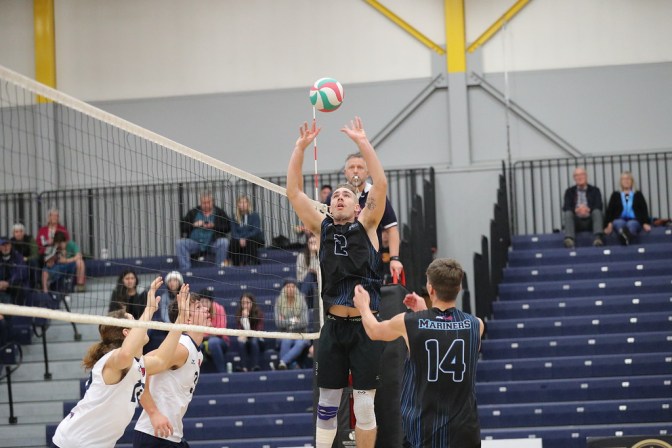
This year hasn’t been what I wanted, or what I expected. I had a grandiose view on what my comeback to school would entail: I was going to make a splash in my athletic career, I was going to be achieving nothing but A+’s throughout all of my classes, and I was going to be engaged constantly in different mental health initiatives around campus, most of which I had planned on organizing myself. These goals still feel achievable, yet I had for most of the school year felt myself let down and disappointed. I felt like I had failed myself, and that it was too late to start doing what I had initially set as my goals for 2019-2020.
This disappointment began with easily the largest hurdle in my athletics career that I have ever had to overcome. In September, after hardly a week of training, I tore my meniscus, a piece of cartilage in the knee that acts as a cushion between the femur and the tibia. In my own research, as far as I could tell, I was going to be hurt for about 4-6 weeks, which would take me into early October for my recovery period, yet I found myself experiencing debilitating pain far longer, meaning that I wasn’t able to step on the court pain-free until around January 20th. Leading up to that point, I found myself frustrated with my injury and losing confidence in myself, which has resulted in losing the confidence in my abilities that I once had, and playing undoubtedly the worst volleyball of my entire career, despite getting bigger, stronger, and smarter about the game. During my injury, I had begun to question whether or not I was even capable of playing the sport that I had had so much success in, winning countless individual awards and 8 total provincial/national gold medals.
While I had found myself preaching prior to my injury about how mental health can affect an athlete’s performance, I had never felt like I personally experienced the negative side to this, but only the positive. I had only felt the mental boon one experiences when they’re happy, when they enjoy getting out of bed every morning, and when their relationships are intact and healthy. Despite my depression, I had never really felt like it hindered my ability to play volleyball. Sport felt like the only part of my life that somehow was immune to my persistent mental health struggles, while every other part, namely my personal relations and friendships, would suffer so profoundly. Volleyball was the one aspect of my life that was a constant, that I knew I could pick up and perform at a high level, so when I found myself struggling to perform, I had lost that one thing that had been consistent for my entire teenage and adult life. This disappointment, pain, and self-doubt had resulted in a snowball effect, where other aspects of my life began to take a hit.
I have found myself falling into the same trap that once haunted me: eating erratically, sleeping far more than any human needs to sleep, cutting myself off from different social connections, and coming up with every excuse possible as to why I couldn’t see my friends or family. I found myself just wanting to be alone, to be free of the burden that was simple social interaction. Even my biggest passion, which has long been working with kids, has appeared undesirable to me at so many different points during the last few months. Humans are meant to foster meaningful connections with one another, and when you lose the desire for something that research has repeatedly shown is a requirement for human success, how does one remedy that? The only way to remedy this sort of scenario is to already have certain support structures in place, to be proactive rather than reactive, which in my case, I have long felt that I have done little to earn. I can’t imagine a world in which I didn’t have my family, my closest friends, and counselling available to me in order to help me out when I feel myself slipping. If I were born to a different family, a family with significantly less financial stability, for example, I would likely not be able to pursue any degree of my choice, I wouldn’t be able to ask my family to help me pay for counselling at any moment, and I wouldn’t have the financial freedom to travel to see my family that I would otherwise.
The most common misconception that I have seen repeated about depression is that depression’s opposite is happiness. This is a misnomer, and one that does significant damage to discourse surrounding mental health. To quote Andrew Solomon, “The opposite of depression is not happiness, but vitality, and it was vitality that seemed to seep away from me in that moment.” While happiness would be simply an emotional state, mood is so much more complicated than this. I can feel depression and happiness at the same time, but vitality and depression cannot coexist. Depression, then, in this case, instead of sadness, is better defined by an indifference to happiness, indifference to personal health, indifference to anything that those of a conventionally “normal” mood would typically care about. This is what makes depression and other mental illnesses so complicated. The problem with characterizing depression as simply “sadness” is that it’s easy to tell someone who is sad that to cheer up they should go outside, exercise, eat healthy, and keep in touch with their family and friends. For some people who are feeling sad, these suggestions may be appropriate. It’s so much more difficult to convince this person that they should value any of these things, or that vitality is something that they should even desire. This hump that one has to get over is easily the hardest part of overcoming mental illness, yet is the one that is absolutely required to assure any kind of progress.
My first semester has been profoundly difficult. I have failed to meet my own expectations in my athletics career, I got good grades, not perfect grades, and I have not been able to engage in nearly as many mental heath initiatives as I would’ve wanted. I had a meeting with my coach about my thoughts on my season, and following this, I had a realization: everything that has happened is okay. I committed myself to the recovery of my leg, I am pain-free, I have successfully adapted to living in a province that I have never lived in before, I have made friends, I have found teammates that I care so much about, and while doing all of this, the fact that I was able to be engaged in any mental health initiatives on campus was a wonder. My perspective has changed. I could’ve never predicted that I would have hurt myself, I would’ve never been able to predict the hurdles required to overcome to get involved on campus, and there is no way that I could’ve expected to feel an instant sense of belonging that I so craved. I didn’t meet my expectations of myself, and that’s okay. Transitions are a process that naturally bring hardships that are worth working through, and all that is within our power in relation to the past is to reflect. To reflect upon where we were, where we are, and where we hope to be.
“Life can only be understood backwards; but it must be lived forwards.”
-Søren Kierkegaard
Let’s talk.
 garrett suderman - words and things